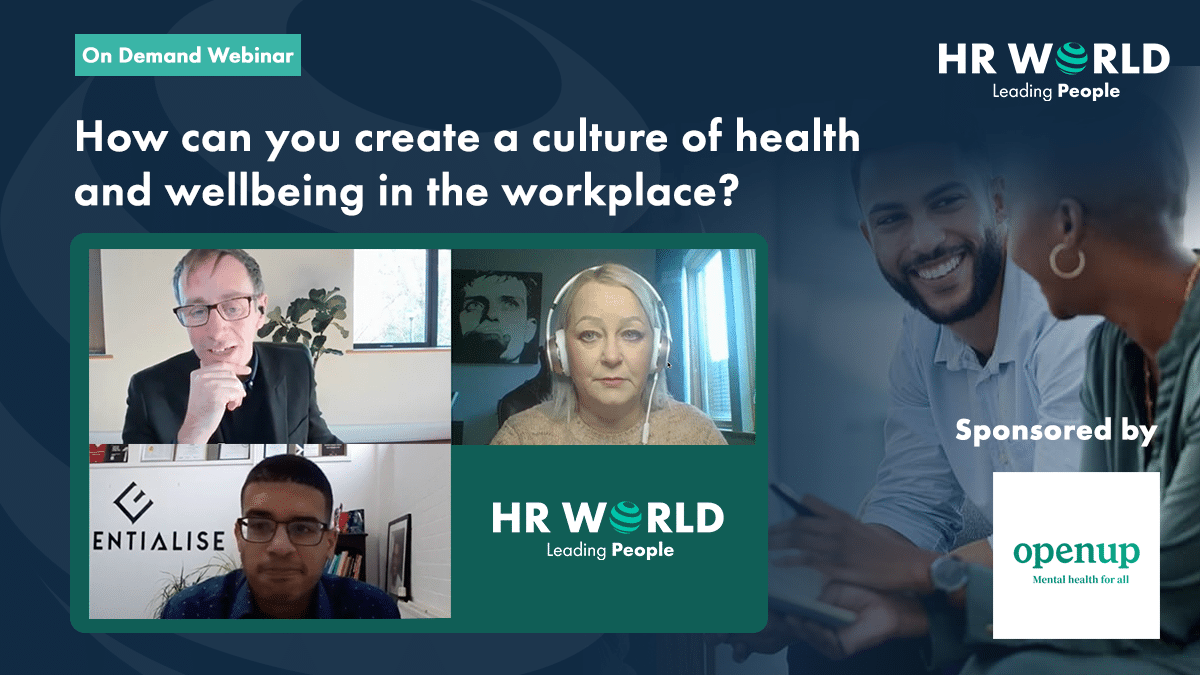
This webinar tackled the important and timely issue of creating a health and wellbeing culture in the workplace.
Featuring the input of Lisa Haggar, straight talking HR Director and LinkedIn’s favourite HR rebel, and Lee Chambers, business psychologist and founder of Essentialise Workplace Wellbeing, the webinar covered wellbeing strategy, individual interventions and the use of external resources for building an effective culture to meet the challenges of the coming year.
Sponsored by mental health wellbeing support provider OpenUp the webinar comes at a time of change and stress for many. The cost-of-living crisis and what Lisa Haggar described as the ‘hangover’ from the pandemic, means that 2023 is likely to bring further challenges for companies and individuals in this area.
Over the course of the conversation it emerged that businesses need to ensure the subject of health and wellbeing is understood and acted upon by those leading the organisation and indeed by every employee. While a wellbeing programme is clearly attractive from a recruitment and retention point of view, the workplace is also a great place for support to be made available for those who are experiencing challenges. This can be in the form of a clear strategy, the provision of external resources or even just through employees being willing to listen and help each other.
A culture of health and wellbeing is clearly not just a ‘nice to have’, it is something that can have a real genuine benefit on the bottom line for a business. Lisa Haggar noted how the cost of wellness could be expressed through the impact of absence or talent leaving the business. Initiative that reduced this would directly reduce costs to the company.
Meanwhile Lee noted how the wellbeing sector had now developed into a complex and full marketplace and that employers should be careful in their selection of suppliers, checking that the provision offered would be valued and used by employees, and also talking to current users about their experience.
Supporting health and wellbeing cannot be a ‘tick-box’ exercise and is something that needs to be fully supported by leaders and line managers. If necessary learning and development resources should be dedicated to this area to ensure everyone concerned understands how this support can be delivered and precisely what the benefits are.